[Sample Post] Revolutionary Discoveries from the James Webb Space Telescope Rewriting Cosmic History
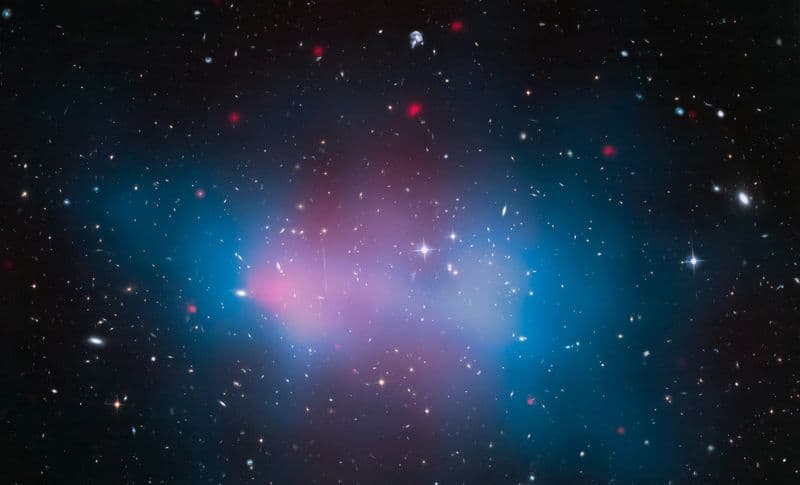
Since beginning its scientific operations in mid-2022, the James Webb Space Telescope (JWST) has fundamentally transformed our understanding of the universe. This $10 billion marvel of engineering, with its 6.5-meter segmented primary mirror and suite of infrared instruments, has peered deeper into space and further back in time than any previous observatory, revealing cosmic phenomena that challenge existing theories and open new frontiers in astrophysics.
The telescope's unprecedented infrared sensitivity and resolution have allowed astronomers to observe the universe in ways never before possible. From the earliest galaxies that formed just hundreds of millions of years after the Big Bang to the atmospheric compositions of distant exoplanets, JWST's discoveries are rewriting textbooks and forcing scientists to reconsider fundamental assumptions about cosmic evolution.
Technical Capabilities Enabling Discovery
The James Webb Space Telescope's revolutionary discoveries stem from its exceptional technical capabilities, each designed to overcome the limitations that constrained previous space-based observatories.
The Infrared Advantage
Operating primarily in the infrared spectrum (0.6 to 28 micrometers), JWST can observe light that has been redshifted by the universe's expansion. This capability is crucial for studying the early universe, as light from the most distant galaxies has been stretched to infrared wavelengths by the time it reaches us.
The infrared advantage extends beyond cosmological studies:
Dust Penetration: Infrared light passes through cosmic dust that blocks visible light, revealing star formation regions hidden from optical telescopesThermal Emission: Cool objects like brown dwarfs and planetary atmospheres emit primarily in infraredMolecular Signatures: Many molecules have distinctive absorption features in the infrared spectrumStellar Evolution: Different stages of stellar evolution are best observed at infrared wavelengths
Unprecedented Sensitivity and Resolution
JWST's combination of large aperture and advanced instruments provides extraordinary sensitivity and angular resolution:
Capability | JWST Performance | Previous Best |
|---|---|---|
Mirror Size | 6.5 meters | 2.4 meters (Hubble) |
Light-Gathering Power | 6.25x Hubble | Reference standard |
Angular Resolution (infrared) | 0.1 arcseconds | 0.6 arcseconds (Spitzer) |
Spectral Resolution | Up to 3,000 | Variable by instrument |
Cryogenic Operations
JWST's infrared detectors must operate at extremely low temperatures to minimize thermal noise. The telescope's multi-layer sunshield reduces the temperature on the cold side to about 50 Kelvin, while the instruments themselves are cooled to as low as 7 Kelvin using mechanical cryocoolers.
This extreme cooling enables detection of incredibly faint infrared sources, allowing JWST to observe objects billions of times fainter than what the human eye can see.
Early Universe Discoveries
JWST's most groundbreaking discoveries have come from its observations of the early universe, revealing galaxies that formed much earlier and evolved much faster than theoretical models predicted.
The Most Distant Galaxies
Within months of beginning operations, JWST identified numerous galaxy candidates at unprecedented redshifts, corresponding to when the universe was only 300-400 million years old. These observations have pushed the frontier of the observable universe significantly further back in time.
The most distant confirmed galaxies observed by JWST include:
JADES-GS-z13-0: Observed at redshift z~13, when the universe was approximately 325 million years oldJADES-GS-z11-0: At redshift z~11, showing unexpected maturity for such an early epoch
CEERS-93316: Initially thought to be at z~16, representing the universe at just 250 million years after the Big Bang
Unexpected Galaxy Properties
The early galaxies discovered by JWST display properties that challenge current theoretical models:
Unexpected Size and Mass: Many early galaxies are larger and more massive than simulations predictedRapid Chemical Evolution: Higher metallicity than expected, indicating faster star formation and chemical enrichmentMature Structures: Well-developed spiral arms and bars in galaxies thought to be too young for such structuresActive Supermassive Black Holes: Evidence of massive black holes in very early galaxies
The Epoch of Reionization
JWST has provided crucial insights into the Epoch of Reionization, when the first stars and galaxies ionized the neutral hydrogen that filled the early universe:
Ionizing Photon Production: Measurements of how efficiently early galaxies produced ionizing radiationBubble Structure: Observations of ionized regions around early galaxiesTimeline Refinement: Better constraints on when reionization began and endedSource Identification: Determining which types of objects drove reionization
Stellar Formation and Evolution
JWST's infrared capabilities have revolutionized our understanding of how stars form and evolve, revealing processes hidden from optical observations.
Star Formation in Unprecedented Detail
The telescope has peered through dust clouds to reveal star formation in nearby and distant galaxies:
Protostellar Disks: Direct imaging of disks around forming stars, showing where planets will eventually formStellar Nurseries: Detailed views of star-forming regions like the Carina Nebula and Orion NebulaBrown Dwarf Formation: Observations of objects too small to sustain hydrogen fusionStellar Feedback: How massive stars affect their surrounding environment through radiation and stellar winds
The First Stars (Population III)
One of JWST's key goals is detecting signatures of Population III stars—the first generation of stars that formed from primordial hydrogen and helium:
Indirect Detection: Searching for their chemical signatures in later-generation starsSupernova Signatures: Looking for the distinctive explosion patterns of very massive first stars
Galaxy Chemical Evolution: Understanding how first stars enriched the universe with heavy elementsBlack Hole Seeds: Investigating how first stars may have formed the seeds of supermassive black holes
Stellar Death and Supernovae
JWST has captured detailed observations of stellar death processes:
Type Ia Supernovae: Precise measurements for cosmological distance determinationsCore-Collapse Supernovae: Understanding how massive stars end their livesSupernova Remnants: Long-term evolution and chemical enrichment from stellar explosionsNeutron Star and Black Hole Formation: Observational constraints on compact object formation
Exoplanet Atmospheric Analysis
JWST has ushered in a new era of exoplanet science by providing detailed atmospheric compositions for dozens of exoplanets across a wide range of masses, temperatures, and orbital configurations.
Atmospheric Composition Measurements
The telescope's spectroscopic capabilities allow precise measurement of atmospheric constituents:
Water Vapor: Detected in numerous exoplanet atmospheres, from hot Jupiters to potentially habitable worldsCarbon Dioxide: First detected by JWST in exoplanet WASP-39b, confirmed in many othersMethane: Detected in some atmospheres, absent in others where models predicted it should be presentHydrogen Sulfide: First detected in exoplanet atmospheres by JWSTSodium and Potassium: Alkali metals providing insights into atmospheric dynamics
Temperature and Weather Patterns
JWST can map temperature variations across exoplanet atmospheres:
Day-Night Temperature Differences: Measuring heat redistribution on tidally locked planetsAtmospheric Circulation: Inferring wind patterns from temperature and composition mapsCloud Formation: Detecting and characterizing cloud compositions and distributionsSeasonal Variations: Long-term monitoring of atmospheric changes
Habitability Assessments
While JWST cannot directly detect life, it can assess planetary habitability:
Atmospheric Escape: Measuring how planets lose their atmospheres to spaceGreenhouse Effects: Understanding how atmospheric composition affects surface temperaturesChemical Disequilibrium: Looking for combinations of gases that might indicate biological processesSurface Pressure: Constraints on whether liquid water could exist on planetary surfaces
Notable Exoplanet Discoveries
Several exoplanets have provided particularly significant results:
Planet | Key Discovery | Significance |
|---|---|---|
WASP-39b | Detailed atmospheric composition | First complete atmospheric characterization |
WASP-96b | Clear, haze-free atmosphere | Challenges atmospheric models |
HAT-P-18b | Unexpected atmospheric properties | Tests planetary formation theories |
GJ 1214b | Atmosphere confirmation | Sub-Neptune atmospheric characterization |
Solar System Science
JWST has also revolutionized our understanding of objects within our own solar system, providing new insights into planetary formation and evolution.
Giant Planet Atmospheric Dynamics
Jupiter: Unprecedented views of atmospheric circulation, including the Great Red Spot and polar regionsSaturn: Detailed observations of ring structure and atmospheric compositionUranus and Neptune: First infrared observations revealing atmospheric dynamics and compositionsSeasonal Changes: Long-term monitoring of atmospheric evolution
Small Body Discoveries
Asteroid Compositions: Spectroscopic analysis revealing diverse mineral compositionsComet Activity: Detailed observations of coma composition and structureKuiper Belt Objects: Characterization of the most distant solar system objectsTrojan Asteroids: Insights into the early solar system's dynamical evolution
Moon and Satellite Studies
Europa and Enceladus: Water vapor plume analysis and surface composition studiesTitan: Atmospheric composition and surface feature identificationLunar Observations: Complementing robotic mission data with infrared observationsIrregular Satellites: Characterization of captured asteroids and comets
Galactic Archaeology and Chemical Evolution
JWST's observations are providing unprecedented insights into how galaxies like our own Milky Way formed and evolved over cosmic time.
Galaxy Formation and Merger History
Early Galaxy Mergers: Observing galaxies in the process of merging in the early universeStellar Population Synthesis: Decomposing galaxy light into different stellar age populationsChemical Gradient Evolution: How metallicity gradients in galaxies change over timeMorphological Evolution: Understanding how galaxy shapes change through cosmic time
Stellar Archaeology
Ancient Star Clusters: Dating the oldest stellar populations in nearby galaxiesChemical Abundance Patterns: Tracing element production through cosmic historyStellar Streams: Observing the tidal disruption of satellite galaxiesHalo Formation: Understanding how galactic halos assembled
Supermassive Black Hole Growth
Active Galactic Nuclei: Observing supermassive black holes in distant galaxiesBlack Hole-Galaxy Scaling Relations: Understanding co-evolution of black holes and galaxiesFeeding and Feedback: Mechanisms by which black holes affect star formationIntermediate-Mass Black Holes: Potential detections of missing-link black holes
Challenging Existing Theories
JWST's discoveries have revealed phenomena that challenge current theoretical understanding of cosmic evolution.
Lambda-CDM Model Tensions
Several observations have created tensions with the standard Lambda-CDM cosmological model:
Early Galaxy Formation: Galaxies appear more mature earlier than predictedStructure Formation Timeline: Large structures forming sooner than simulatedStellar Mass Assembly: Stars forming more efficiently in the early universeSupermassive Black Hole Growth: Black holes growing faster than theoretical limits
Star Formation Efficiency
Observations suggest that star formation was more efficient in the early universe than current models predict:
High Stellar Masses: Early galaxies contain more stars than expectedRapid Chemical Enrichment: Faster heavy element production than modeledFeedback Mechanisms: Stellar feedback less effective at stopping star formationInitial Mass Function: Possible variations in stellar mass distributions
Dark Matter and Galaxy Formation
JWST observations are providing new tests of dark matter models:
Small-Scale Structure: Constraints on dark matter particle propertiesGalaxy Formation Efficiency: How efficiently dark matter halos form galaxiesSatellite Galaxy Populations: Testing predictions of different dark matter modelsAlternative Gravity Theories: Some observations might support modified gravity theories
Technological Innovation and Future Upgrades
The success of JWST has driven continued innovation in space-based astronomy technology and planning for future missions.
Current Instrumental Capabilities
JWST's four main instruments each provide unique capabilities:
NIRCam (Near Infrared Camera): Primary imaging instrument and wavefront sensorNIRSpec (Near Infrared Spectrograph): Multi-object spectroscopy with micro-shuttersMIRI (Mid-Infrared Instrument): Imaging and spectroscopy from 5-28 micrometersFGS/NIRISS: Fine guidance and specialized spectroscopy modes
Future Mission Concepts
JWST's success has inspired planning for next-generation space telescopes:
Extremely Large Telescopes: Ground-based telescopes with 30+ meter mirrorsSpace-Based Interferometry: Multiple telescopes working together in spaceCoronagraph Missions: Specialized telescopes for direct exoplanet imagingFar-Infrared Observatories: Extending observations to longer wavelengths
Data Processing and Analysis Innovations
The volume and complexity of JWST data has driven advances in astronomical data processing:
Machine Learning Applications: AI-assisted source detection and classificationCloud Computing: Scalable processing of large datasetsAutomated Pipelines: Standardized data reduction and calibration proceduresCollaborative Analysis Tools: Platforms enabling global scientific collaboration
Scientific Impact and Publications
The scientific impact of JWST is already evident in the astronomical literature and broader scientific community.
Publication Statistics
Since beginning operations, JWST has generated an unprecedented volume of scientific publications:
- Over 500 peer-reviewed papers in the first 18 months
- Publications in top-tier journals including Nature, Science, and ApJ
- International collaboration involving thousands of researchers
- Discoveries featured in major media outlets worldwide
Paradigm Shifts
Several fundamental paradigm shifts are emerging from JWST observations:
Early Universe Evolution: Galaxies formed and evolved faster than previously thoughtExoplanet Diversity: Greater variety in atmospheric compositions than expectedStar Formation Mechanisms: More complex processes than simple models suggestedCosmic Structure Formation: Need for revised models of large-scale structure evolution
Educational Impact
JWST's discoveries are transforming astronomy education:
Textbook Revisions: New editions incorporating JWST discoveriesPublic Engagement: Spectacular images capturing public imaginationStudent Research: Unprecedented opportunities for student involvement in cutting-edge researchOnline Resources: Extensive databases and analysis tools available to educators
Challenges and Limitations
Despite its revolutionary capabilities, JWST faces several challenges and limitations that affect its scientific output.
Technical Challenges
Micrometeorite Impacts: Unavoidable damage to the primary mirror over timeInstrument Aging: Gradual degradation of detector sensitivityConsumable Resources: Limited fuel supply determining mission durationCommunication Constraints: Data downlink limitations affecting observation efficiency
Observational Limitations
Sky Coverage: Can only observe about 40% of the sky at any given timeBrightness Limits: Too sensitive for observations of very bright objectsWavelength Coverage: Limited to infrared, missing crucial UV and X-ray informationTime Allocation: Enormous demand for observing time exceeds availability
Data Analysis Challenges
Data Volume: Terabytes of data requiring sophisticated processing pipelinesCalibration Complexity: Ongoing refinement of instrumental calibrationsSoftware Development: Need for specialized analysis software and toolsInterpretation Challenges: Complex data requiring interdisciplinary expertise
Future Prospects and Legacy
JWST's mission is planned to last at least 10 years, with sufficient fuel for potentially 20 years of operations. Its discoveries are shaping the future of astronomy in multiple ways.
Long-term Scientific Goals
Complete Early Universe Survey: Systematic study of galaxy formation across cosmic timeExoplanet Census: Comprehensive atmospheric characterization of nearby exoplanetsSolar System Evolution: Long-term monitoring of dynamic processesFundamental Physics: Tests of general relativity and cosmological models
Synergy with Other Observatories
JWST's impact is magnified through coordination with other major observatories:
Hubble Space Telescope: Complementary visible-light observationsChandra and XMM-Newton: X-ray observations of high-energy phenomenaALMA: Radio observations of star formation and galaxy evolutionRubin Observatory: Large-scale survey data for target selection
Training the Next Generation
JWST is training a new generation of astronomers:
Graduate Student Research: Thousands of students working with JWST dataPostdoctoral Opportunities: New career paths in space-based astronomyInternational Collaboration: Global partnerships in astronomical researchInterdisciplinary Skills: Combining astronomy with data science and engineering
Conclusion
The James Webb Space Telescope represents a watershed moment in astronomical history, comparable to Galileo's first telescopic observations or Hubble's discovery of cosmic expansion. In just its first years of operation, JWST has fundamentally altered our understanding of cosmic evolution, stellar formation, planetary atmospheres, and the structure of the universe itself.
The telescope's discoveries challenge existing theoretical frameworks while opening new research frontiers. From revealing unexpectedly mature galaxies in the early universe to characterizing the atmospheric compositions of distant worlds, JWST is providing answers to long-standing questions while raising entirely new ones that will guide astronomical research for decades to come.
Perhaps most importantly, JWST exemplifies the power of international collaboration and long-term scientific investment. The telescope represents contributions from thousands of scientists, engineers, and technicians across multiple continents, demonstrating what human ingenuity can achieve when focused on understanding our place in the cosmos.
As JWST continues its mission, we can expect continued revolutionary discoveries that will reshape our understanding of the universe. The telescope's legacy will extend far beyond its operational lifetime, as the data it collects will be analyzed and reanalyzed for generations, each new analysis potentially revealing additional insights into the workings of our cosmos.
The universe revealed by JWST is more dynamic, complex, and surprising than we ever imagined. As we stand on the threshold of even greater discoveries, we are reminded that our cosmos still holds countless mysteries waiting to be unveiled. The James Webb Space Telescope has given us new eyes with which to see the universe—and what we are seeing is transforming our understanding of everything from the smallest exoplanet atmospheres to the largest structures in the cosmos.