[Sample Post] Mars Exploration Technology Engineering Humanity's Future on the Red Planet
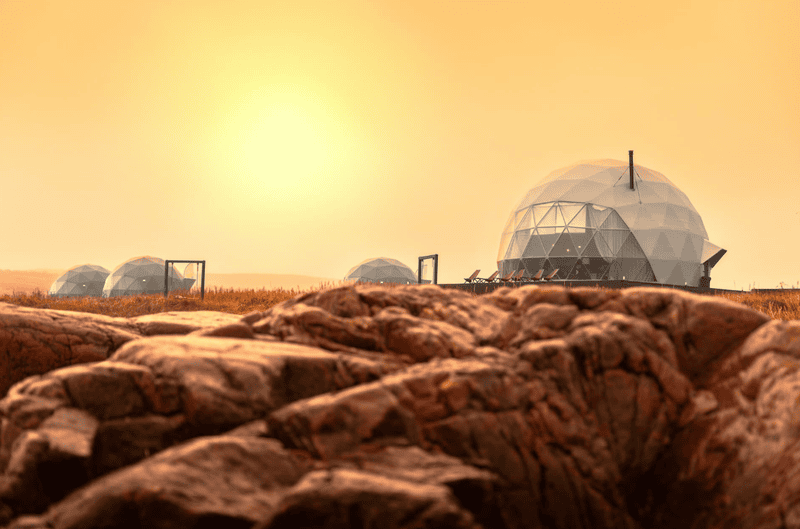
Mars exploration represents one of humanity's most ambitious technological endeavors, pushing the boundaries of engineering, robotics, and space science. From the first successful flyby missions in the 1960s to today's sophisticated rovers and orbiters, each mission to Mars has advanced our technological capabilities and brought us closer to the ultimate goal: establishing a sustainable human presence on the Red Planet.
The technological challenges of Mars exploration are unprecedented in their complexity and scope. Unlike lunar missions, which benefit from Earth's proximity and real-time communication, Mars missions must operate autonomously across vast distances, survive in harsh environments, and function reliably for years without direct human intervention. These constraints have driven innovations that not only advance space exploration but also benefit numerous terrestrial applications.
Current Mars Exploration Technologies
The current fleet of Mars exploration vehicles represents decades of technological evolution, each incorporating lessons learned from previous missions while pushing new frontiers in autonomous operation, scientific instrumentation, and environmental survival.
Rovers: Mobile Laboratories
Modern Mars rovers are essentially mobile laboratories capable of conducting complex scientific investigations while navigating challenging terrain with minimal human oversight.
NASA Perseverance Rover (2021-present):The most advanced rover currently operating on Mars, Perseverance incorporates revolutionary technologies:
- Autonomous Navigation: The rover can navigate up to 120 meters per day using machine learning algorithms to identify safe paths
- Sample Collection System: Sophisticated drilling and caching system for future sample return missions
- MOXIE (Mars Oxygen In-Situ Resource Utilization Experiment): Successfully produces oxygen from Martian atmosphere
- Ingenuity Helicopter: First powered flight on another planet, extending exploration capabilities
Technical Specifications:
System | Capability | Innovation |
|---|---|---|
Power | Multi-Mission Radioisotope Thermoelectric Generator (MMRTG) | 110 watts continuous power |
Computing | RAD750 radiation-hardened processor | Autonomous decision-making |
Communication | X-band and UHF antennas | Direct-to-Earth and orbital relay |
Mobility | Six-wheel rocker-bogie suspension | All-terrain navigation |
Scientific Instruments | 7 advanced instruments | Multi-spectral analysis capabilities |
China's Zhurong Rover (2021-present):China's first successful Mars rover demonstrates rapid advancement in space technology:
- Adaptive Navigation: Terrain analysis and obstacle avoidance
- Scientific Payload: Ground-penetrating radar, spectrometers, and cameras
- Dust Removal System: Solar panel cleaning for extended operation
- Deployable Instruments: Remote camera for rover photography
Orbital Reconnaissance and Communication
Mars orbiters provide critical support for surface missions while conducting their own scientific investigations:
NASA Mars Reconnaissance Orbiter (MRO):
- HiRISE Camera: 0.3-meter resolution imaging
- Data Relay: Primary communication link for surface missions
- Climate Monitoring: Long-term atmospheric and surface observations
ESA Mars Express:
- Subsurface Radar: MARSIS instrument detecting underground water
- Atmospheric Analysis: Comprehensive study of Martian atmosphere
- High-Resolution Imaging: Detailed mapping of surface features
Entry, Descent, and Landing (EDL) Systems
Landing on Mars presents unique challenges due to the thin atmosphere and lack of thick atmosphere for parachute-only landings:
Sky Crane Technology: Revolutionary landing system used for Curiosity and Perseverance
- Combines parachutes, powered descent, and precision hover capabilities
- Enables landing of heavy payloads in challenging terrain
- Achieved remarkable accuracy (landing within kilometers of target sites)
Heat Shield Technology: Advanced materials and designs for atmospheric entry
- PICA-X (Phenolic Impregnated Carbon Ablator) heat shields
- Adaptive guidance algorithms for precise targeting
- Supersonic parachute deployment systems
Life Support and Environmental Technologies
Future human missions to Mars will require sophisticated life support systems capable of recycling air, water, and waste while protecting crew members from radiation and extreme temperatures.
Atmospheric Processing and Oxygen Generation
MOXIE Technology: The Mars Oxygen In-Situ Resource Utilization Experiment has successfully demonstrated oxygen production on Mars:
- Process: Separates oxygen from CO₂ in Martian atmosphere
- Production Rate: Up to 6 grams of oxygen per hour
- Efficiency: 12% of input power converted to useful oxygen
- Scalability: Proof-of-concept for larger human-scale systems
Advanced Life Support Systems:Future systems must provide:
- Air Revitalization: CO₂ removal and oxygen generation
- Water Recovery: Recycling of all wastewater including humidity condensate
- Waste Management: Processing of solid waste and biomass
- Atmospheric Pressure: Maintaining habitable pressure in low-pressure environment
Radiation Protection Technologies
Mars lacks a global magnetic field and thick atmosphere, exposing surface dwellers to harmful cosmic radiation:
Shielding Strategies:
- Mass Shielding: Using local materials (regolith, water) for protection
- Electromagnetic Shields: Experimental active shielding concepts
- Underground Habitats: Utilizing natural terrain for radiation protection
- Protective Suits: Advanced EVA suits with integrated radiation monitoring
Radiation Monitoring Systems:
- Real-time Dosimetry: Continuous radiation exposure monitoring
- Predictive Modeling: Space weather forecasting for EVA planning
- Biological Monitoring: Tracking radiation effects on crew health
- Emergency Protocols: Procedures for high-radiation events
Thermal Management
Mars experiences extreme temperature variations (-195°F to 70°F/-125°C to 20°C):
Heating Systems:
- Radioisotope Heater Units (RHUs): Passive heat sources
- Solar Thermal Systems: Using concentrated solar power
- Waste Heat Recovery: Capturing heat from electronics and machinery
- Phase Change Materials: Thermal energy storage systems
Insulation Technologies:
- Aerogel Insulation: Ultra-low thermal conductivity materials
- Multi-Layer Insulation: Reflective barrier systems
- Vacuum Insulation: Eliminating conductive heat transfer
- Smart Materials: Adaptive thermal properties based on conditions
Propulsion and Transportation Systems
Efficient transportation between Earth and Mars, as well as mobility on Mars, requires advanced propulsion technologies tailored to the unique challenges of interplanetary travel.
Interplanetary Transportation
Chemical Propulsion: Current standard for Mars missions
- Advantages: Proven technology, high thrust
- Limitations: Low specific impulse, large fuel requirements
- Applications: Launch from Earth, Mars orbit insertion, EDL systems
Electric Propulsion: Increasingly used for cargo missions
- Ion Thrusters: High specific impulse, efficient for long-duration transfers
- Hall Effect Thrusters: Balance of thrust and efficiency
- Solar Electric Propulsion: Using solar panels for power
- Nuclear Electric Propulsion: Higher power for faster transit times
Nuclear Thermal Propulsion: Future technology for crewed missions
- Advantages: Higher specific impulse than chemical, shorter transit times
- Challenges: Nuclear safety, engine development, testing requirements
- NASA's Artemis Program: Developing nuclear thermal engines for Mars missions
Mars Surface Transportation
Pressurized Rovers: For human exploration missions
- Range: Hundreds of kilometers from base
- Life Support: Extended crew accommodation
- Scientific Capability: Mobile laboratory functions
- Terrain Capability: All-terrain navigation systems
Mars Aircraft: Expanding exploration capabilities
- Ingenuity Heritage: Building on helicopter success
- Fixed-Wing Aircraft: Longer range and endurance
- Hybrid Systems: Combining hover and forward flight capabilities
- Atmospheric Challenges: Operating in thin atmosphere (1% of Earth's density)
Surface-to-Orbit Vehicles: For crew and cargo return
- Mars Ascent Vehicle: Launching from Mars surface to orbit
- Fuel Production: Using local resources for propellant
- Staging: Multi-stage systems for orbit achievement
- Reusability: Reducing mission costs through vehicle reuse
In-Situ Resource Utilization (ISRU)
ISRU technologies enable the production of essential resources from Martian materials, dramatically reducing the mass and cost of missions by eliminating the need to transport everything from Earth.
Atmosphere Processing
The Martian atmosphere, while thin, provides valuable resources:
Carbon Dioxide Utilization (95% of Martian atmosphere):
- Oxygen Production: CO₂ + energy → CO + O₂ (MOXIE process)
- Fuel Production: CO₂ + H₂ → CH₄ + H₂O (Sabatier reaction)
- Carbon Production: For manufacturing applications
Water Vapor Extraction:
- Atmospheric Water: Extracting trace water vapor from air
- Seasonal Variations: Higher humidity during certain seasons
- Concentration Methods: Adsorption and condensation systems
Water Extraction and Processing
Water is crucial for life support, fuel production, and radiation shielding:
Subsurface Ice Mining:
- Ground-Penetrating Radar: Mapping subsurface ice deposits
- Extraction Methods: Thermal, mechanical, and chemical approaches
- Purity Concerns: Removing perchlorates and other contaminants
- Processing Systems: Melting, purification, and storage
Hydrated Mineral Processing:
- Clay Minerals: Extracting water from hydrated clays
- Gypsum Processing: Chemical extraction from sulfate minerals
- Energy Requirements: Heating and chemical processing needs
Construction Materials
Local material utilization for habitat construction:
Regolith Processing:
- 3D Printing: Using Martian soil for construction
- Concrete Production: Creating cement from local materials
- Brick Manufacturing: Compressed regolith blocks
- Metal Extraction: Recovering iron and other metals from regolith
Advanced Manufacturing:
- Additive Manufacturing: 3D printing with local materials
- Sintering Processes: Fusing particles without binding agents
- Composite Materials: Combining organic and inorganic components
- Quality Control: Ensuring structural integrity of constructed elements
Communication and Computing Systems
Mars missions require sophisticated communication and computing systems that can operate reliably across interplanetary distances and in harsh environmental conditions.
Deep Space Communication
Communication Challenges:
- Distance: Up to 401 million kilometers from Earth
- Signal Delay: 4-24 minutes one-way depending on planetary positions
- Power Requirements: High-gain antennas and powerful transmitters
- Orbital Mechanics: Communication windows limited by planetary alignment
Deep Space Network (DSN):
- Ground Stations: 34-meter and 70-meter diameter antennas
- Global Coverage: Stations in California, Spain, and Australia
- Data Rates: Up to several Mbps for Mars missions
- Scheduling: Coordinating multiple missions competing for antenna time
Mars Relay Network:Orbiters serve as communication relay stations:
- Higher Data Rates: Shorter distance from surface to orbit
- Extended Coverage: Multiple daily communication windows
- Redundancy: Multiple orbiters providing backup capabilities
- Network Growth: Adding new relay satellites with each mission
Autonomous Computing Systems
Mars missions must operate with minimal human supervision due to communication delays:
Artificial Intelligence Applications:
- Path Planning: Autonomous navigation and obstacle avoidance
- Scientific Prioritization: Identifying interesting targets for study
- Anomaly Detection: Recognizing and responding to system problems
- Resource Management: Optimizing power, data, and consumables usage
Fault-Tolerant Computing:
- Radiation-Hardened Processors: Surviving cosmic radiation
- Redundant Systems: Multiple backup systems for critical functions
- Error Detection and Correction: Protecting data and program integrity
- Safe Mode Operations: Automatic protective responses to failures
Data Management and Storage
Data Volume Challenges:Modern Mars missions generate enormous amounts of data:
- High-Resolution Imaging: Gigabytes of image data daily
- Scientific Instruments: Continuous sensor measurements
- Engineering Telemetry: System health and status information
- Limited Bandwidth: Constraints on data transmission to Earth
Intelligent Data Processing:
- Onboard Analysis: Processing data locally to identify priority items
- Compression Algorithms: Reducing data volume for transmission
- Selective Transmission: Sending only most important data immediately
- Long-term Storage: Archiving data for later transmission opportunities
Future Technologies in Development
The next generation of Mars exploration technologies will enable permanent human settlement and large-scale industrialization of the Red Planet.
Next-Generation Propulsion
Nuclear Pulse Propulsion: Breakthrough technology for rapid interplanetary transit
- Project Orion Heritage: Using nuclear explosions for propulsion
- Fusion Rockets: Clean, high-performance propulsion systems
- Transit Times: Reducing Earth-Mars travel to weeks rather than months
- Safety Challenges: Managing nuclear systems in space
Breakthrough Starshot Technologies: Far-future concepts
- Light Sails: Using laser propulsion for high-speed probes
- Fusion Ramjets: Collecting interplanetary medium for fuel
- Antimatter Propulsion: Ultimate high-energy propulsion system
Advanced Life Support
Closed-Loop Systems: Near-perfect recycling of all resources
- Biological Systems: Using plants and microorganisms for life support
- Molecular Recycling: Breaking down waste to base molecules
- Ecosystem Engineering: Creating self-sustaining biological systems
- Waste-to-Energy: Converting organic waste to useful energy
Terraforming Technologies: Long-term planetary modification
- Atmospheric Thickening: Increasing atmospheric pressure
- Greenhouse Gas Addition: Warming the planet through climate modification
- Magnetic Field Generation: Protecting atmosphere from solar wind
- Ecological Introduction: Establishing Earth-like ecosystems
Manufacturing and Construction
Automated Construction Systems:
- Robotic Builders: Autonomous systems for habitat construction
- 3D Printing Scaling: Large-scale additive manufacturing
- Self-Replicating Machines: Systems that can reproduce themselves
- Smart Materials: Materials that adapt to environmental conditions
Industrial Development:
- Metal Refining: Extracting pure metals from Martian ores
- Semiconductor Manufacturing: Producing electronics locally
- Chemical Processing: Creating complex compounds from basic elements
- Biotechnology: Using biological systems for manufacturing
Technical Challenges and Solutions
Mars exploration faces numerous technical challenges that drive innovation in multiple fields of engineering and science.
Environmental Challenges
Dust Storms: Planet-wide dust storms can last for months
- Solar Panel Degradation: Dust accumulation reducing power generation
- Mechanical Wear: Abrasive dust damaging moving parts
- Thermal Issues: Dust affecting thermal management systems
- Solutions: Electrostatic dust removal, protective coatings, sealed systems
Temperature Extremes: Daily temperature swings of over 100°C
- Material Stress: Thermal expansion and contraction cycles
- Seal Failures: Gaskets and seals degrading under thermal stress
- Electronic Issues: Components failing due to temperature variations
- Solutions: Thermal management, material selection, heating systems
Low Atmospheric Pressure: Only 0.6% of Earth's atmospheric pressure
- Boiling Point Issues: Water boils at body temperature
- Pressure Suit Requirements: Maintaining internal pressure for humans
- Outgassing: Materials releasing volatile compounds in vacuum
- Solutions: Pressure vessels, specialized suits, material treatment
Resource Limitations
Power Generation: Limited solar power due to dust and distance from Sun
- Solar Panel Efficiency: Reduced due to dust accumulation and low light
- Nuclear Power: Regulatory and safety challenges
- Energy Storage: Battery degradation in extreme temperatures
- Solutions: Nuclear systems, improved batteries, power management
Materials Scarcity: Limited availability of certain materials on Mars
- Rare Elements: Some elements essential for electronics are rare on Mars
- Manufacturing Capability: Limited ability to create complex components
- Recycling Requirements: Need to reuse and recycle all materials
- Solutions: Advanced recycling, alternative materials, efficient design
Systems Integration Challenges
Complexity Management: Integrating thousands of components and subsystems
- Interface Standards: Ensuring compatibility between different systems
- Testing Limitations: Inability to fully test integrated systems on Earth
- Maintenance Challenges: Repairing complex systems with limited tools
- Solutions: Modular design, standardization, redundancy, comprehensive testing
Human Factors: Designing systems for human operators in extreme environments
- Ergonomics: Equipment designed for use in pressure suits
- Psychological Factors: Isolation and confinement effects
- Training Requirements: Extensive preparation for complex operations
- Solutions: Human-centered design, simulation training, psychological support
Economic and Commercial Aspects
The development of Mars exploration technologies is driving the emergence of new commercial space industries and economic models.
Commercial Space Industry
Launch Services: Companies providing transportation to Mars
- SpaceX: Developing Starship for Mars transportation
- Blue Origin: Long-term Mars exploration goals
- Rocket Lab: Small satellite launch services for Mars missions
- International Competition: Companies worldwide entering Mars market
Technology Development: Private sector innovation in Mars technologies
- ISRU Systems: Companies developing resource utilization technologies
- Life Support: Commercial development of life support systems
- Communications: Private sector communication satellite networks
- Manufacturing: 3D printing and automated manufacturing systems
Economic Models
Cost Reduction Strategies:
- Reusable Launch Vehicles: Dramatically reducing launch costs
- Mass Production: Manufacturing systems in quantity for multiple missions
- Technology Sharing: International cooperation reducing development costs
- Commercial Services: Selling excess capacity to other users
Revenue Generation:
- Research Services: Providing Mars access for scientific institutions
- Resource Sales: Potentially valuable materials returned to Earth
- Technology Transfer: Licensing Mars-developed technologies for Earth use
- Tourism: Long-term potential for Mars tourism industry
Investment and Funding
Funding Source | Investment Level | Focus Areas |
|---|---|---|
Government Agencies | $10+ billion annually | Science missions, technology development |
Private Companies | $5+ billion annually | Commercial services, transportation |
International Partnerships | Variable | Shared missions, technology development |
Private Investors | $1+ billion annually | Speculative technologies, startups |
International Cooperation and Competition
Mars exploration increasingly involves both cooperation and competition between nations and private entities.
Current International Missions
NASA (United States):
- Multiple active missions including Perseverance rover and orbiting satellites
- Artemis program developing Mars mission capabilities
- International partnerships for future crewed missions
ESA (European Space Agency):
- Mars Express orbiter and planned ExoMars rover missions
- Cooperation with NASA on sample return missions
- Advanced propulsion and landing technology development
CNSA (China National Space Administration):
- Successful Zhurong rover mission
- Plans for sample return and crewed missions
- Independent technology development program
Space Agencies of India, UAE, and others:
- Growing participation in Mars exploration
- Specialized missions and technology contributions
- International collaboration on specific projects
Technology Sharing and Standards
Benefits of Cooperation:
- Cost Sharing: Reducing individual nation/company costs
- Risk Distribution: Spreading technical and financial risks
- Expertise Combination: Leveraging different national strengths
- Standardization: Enabling interoperability between systems
Challenges:
- Technology Transfer Restrictions: ITAR and other export controls
- National Security Concerns: Protecting sensitive technologies
- Commercial Competition: Balancing cooperation with business interests
- Political Considerations: Space exploration as national prestige
Future Missions and Timelines
The next two decades will see an unprecedented acceleration in Mars exploration activities, with multiple nations and private companies launching ambitious missions.
Near-Term Missions (2024-2030)
Sample Return Missions:
- Mars Sample Return (NASA/ESA): Returning Perseverance-collected samples to Earth
- Timeline: Launch 2028-2030, Earth return 2033
- Technology Demonstration: Critical technologies for future human missions
Advanced Rover Missions:
- ESA ExoMars Rover: European rover with drilling capability
- China Mars Sample Return: Independent Chinese sample return mission
- Private Missions: Commercial companies launching Mars missions
Orbital Infrastructure:
- Communications Satellites: Establishing Mars internet infrastructure
- Weather Monitoring: Comprehensive atmospheric monitoring systems
- Navigation Satellites: GPS-like system for Mars surface operations
Medium-Term Missions (2030-2040)
Crewed Mars Missions:
- NASA Artemis Mars Extension: Using lunar experience for Mars missions
- SpaceX Starship Missions: Private sector crewed Mars missions
- International Crew: Multinational crewed expeditions to Mars
Permanent Infrastructure:
- Mars Base Construction: First permanent human habitats
- ISRU Industrial Facilities: Large-scale resource processing plants
- Transportation Network: Regular cargo and crew transportation systems
Long-Term Vision (2040+)
Settlement and Industrialization:
- Self-Sustaining Colonies: Communities independent of Earth supply
- Terraforming Experiments: Beginning planetary modification projects
- Interplanetary Economy: Trade and commerce between Earth and Mars
Conclusion
Mars exploration technology represents one of humanity's greatest engineering challenges and achievements. From the first tentative robotic steps on the Martian surface to the sophisticated rovers and orbiters operating today, each technological advancement brings us closer to establishing a permanent human presence on the Red Planet.
The technologies developed for Mars exploration have far-reaching implications beyond space exploration. Advances in autonomous systems, resource utilization, life support, and extreme environment engineering find applications in terrestrial challenges such as remote area operations, sustainable manufacturing, environmental monitoring, and disaster response.
As we look toward the future, the convergence of government space agencies, private companies, and international cooperation promises an acceleration in Mars exploration capabilities. The next two decades will likely see the first human footsteps on Mars, the establishment of permanent research bases, and the beginning of large-scale resource utilization that could support not just scientific exploration but eventual human settlement.
The technological journey to Mars is not just about reaching another planet—it's about expanding human capability, ensuring species survival, and pushing the boundaries of what's possible through science and engineering. The innovations developed for Mars exploration will continue to benefit life on Earth while opening new frontiers for human civilization. As we stand on the threshold of becoming a multi-planetary species, the technologies that enable Mars exploration represent some of humanity's finest achievements and our boldest aspirations for the future.